Industrial Warehouse Cleaning Adelaide: Safer Floor Sequence
Industrial Warehouse Cleaning In Adelaide: Sweep, Scrub, Then Targeted Pressure, The Proven Sequence For Safer Floors
Clean, safe floors keep production moving and people protected. In Adelaide warehouses and factories, the fastest path to that outcome is a precise sequence that controls dust, lifts bonded grime and manages wastewater from start to finish.
Sweep Scrub delivers a three-step method that has become the local benchmark: mechanical sweeping, heavy-duty scrubbing and selective hot-water pressure cleaning with vacuum recovery. It is efficient, water-smart and built around compliance.
Got Dust? Call Us! Call 13004sweep
The proven sequence for safer industrial floors
The best way to clean a warehouse floor is a staged process that tackles loose material first, then bonded soils, then stubborn hotspots where heat and pressure are required. This order reduces airborne dust, cuts pad wear and keeps water use down while improving traction and presentation.
Step 1: Mechanical sweeping to remove pallet chips, shrink-wrap tails, grit and fine particulate.
Step 2: Heavy-duty scrubbing to apply detergent, agitate and vacuum-recover in a single pass.
Step 3: Targeted hot-water pressure cleaning with recovery for grease zones, trenches and drains.
Why sweeping comes first
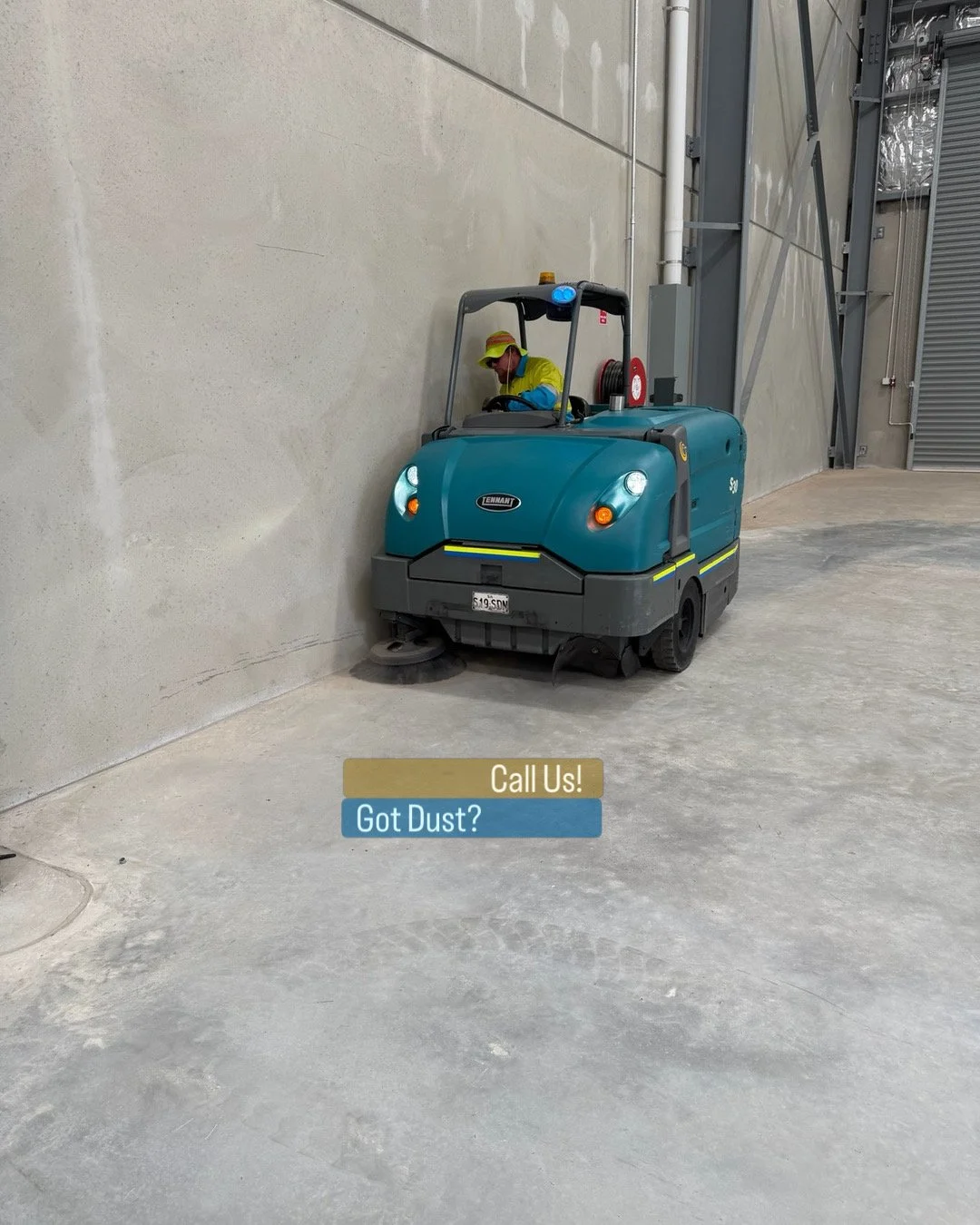
Industrial Sweeping with Tennant S30.
Industrial sweeping should always precede scrubbing. Removing loose dust and debris before wet processes delivers two safety and cost wins. First, it prevents the scrubber from atomising dust into the air, which can trigger sensor faults and reduce air quality. Second, it stops abrasive grit from loading the pads and brushes, which otherwise increases pad abrasion, drags contamination across the surface and risks micro-scratching sealed or epoxy floors. Proper sweeping keeps squeegee lips sealing well, so recovery vacuum systems capture more solution and leave floors drier.
Single-pass efficiency with ride-on scrubbers
Large Adelaide floorplates demand productivity without flooding the site. Ride-on scrubbers such as the T20 Industrial Ride-On Floor Scrubber are designed for single-pass results. They meter detergent precisely, agitate with the correct pad or brush for the surface, and vacuum-recover the solution immediately. Auto-stop valves cut solution flow when brushes lift, reducing waste. Compared to blanket pressure washing, ride-on scrubbing typically uses less water, minimises downtime and restores appearance in fewer passes. Walk-behind units maintain the same standards in tight racking and mezzanines so quality is consistent across the site.
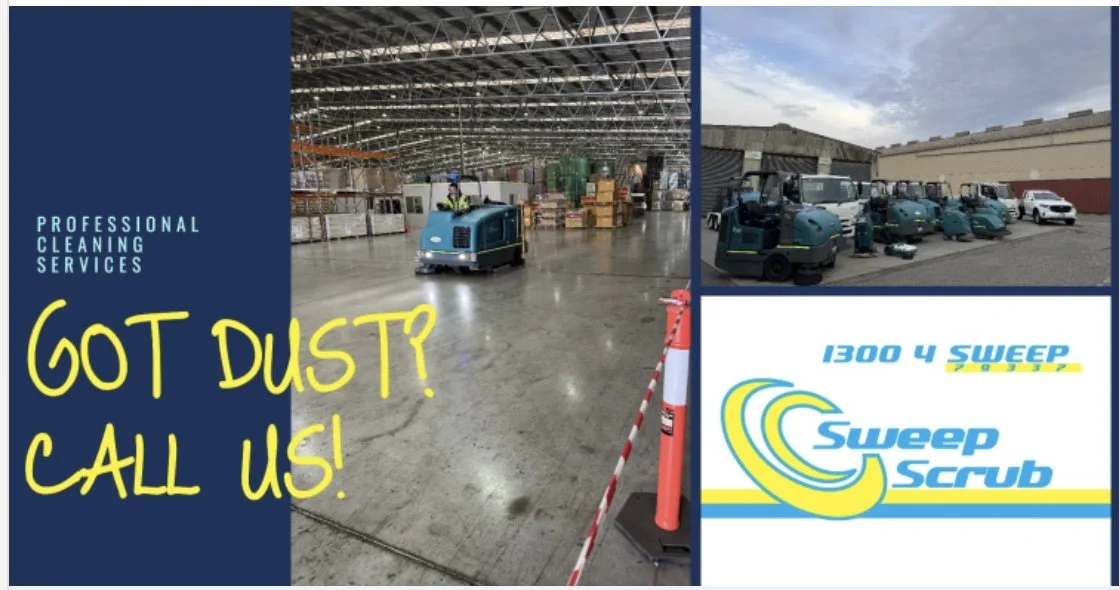
Single pass scrubbing with Tennant M30.
When hot-water pressure with recovery is mandatory
Not every soil will yield to agitation alone. Selective hot-water pressure cleaning is mandatory where you have:
Persistent grease zones and spill areas that resist detergent.
Trench runs, drains and sumps that collect oils and fines.
Loading docks, service bays and workshop bays exposed to fuels and battery residue.
In these locations, heated pressure breaks the bond, while vacuum recovery and holding tanks capture wastewater and solids. This targeted approach avoids blanket washdowns that can overwhelm drains or force contamination into stormwater systems.
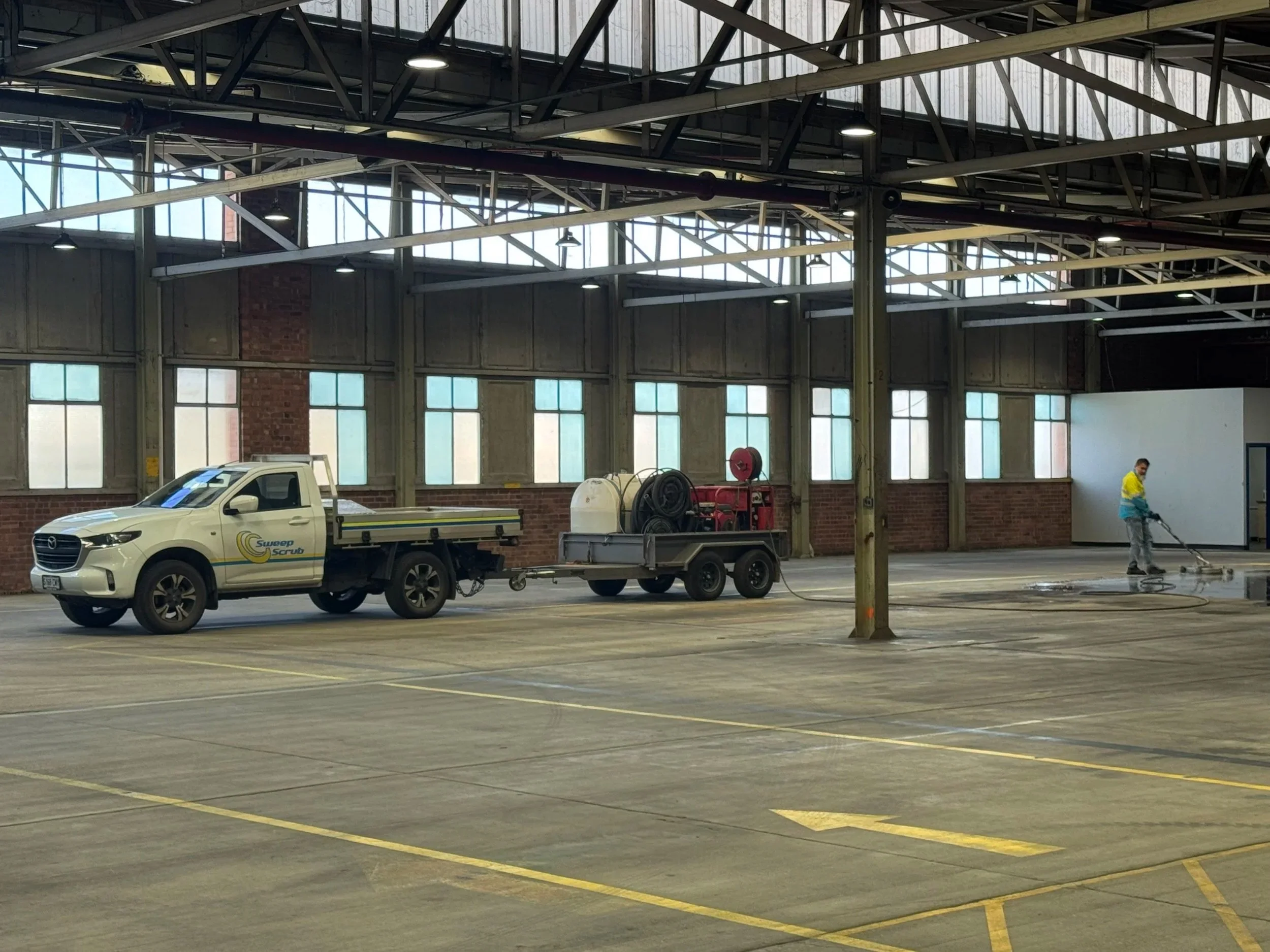
Pressure washing, hot water with recovery.
Got Dust? Call Us! Call 13004sweep
Wastewater capture and EPA compliance
In South Australia, responsible wastewater handling supports environmental obligations and site audits. Pairing pressure units with vacuum recovery, holding tanks and, when required, vac truck capability enables controlled collection, transport and disposal. This supports compliance frameworks and helps protect stormwater. Sweep Scrub provides documentation on processes and keeps Material Safety Data Sheets (MSDS) for chemicals used. The team operates under Safe Work Method Statements (SWMS) and Job Safety and Environmental Assessments (JSEA) so managers can demonstrate due diligence during inspections and audits.
For broader pressure-washing capability across Adelaide, see our pressure cleaning services page to understand how vacuum recovery is integrated across different surfaces and job types.
Safety-first delivery and documentation
Industrial sites require more than clean floors. Sweep Scrub integrates site inductions, police-cleared personnel where needed, and documented risk assessments. SWMS and JSEA are prepared for sweeping, scrubbing and pressure cleaning, with zone-based traffic management, spotters and clear signage. This supports safe delivery during live operations, reduces the chance of forklift conflicts and keeps pedestrian lanes open.
Fixed-price clarity after a free on-site assessment
Every facility is different. A free on-site assessment scopes contamination types, access constraints, water and wastewater logistics, and scheduling needs. Fixed-price quotes follow, giving predictable budgeting for deep cleans or ongoing maintenance programs. This prevents surprises such as hidden wastewater disposal costs or extended machine time in tight-access areas.
If your site also requires broader facility services, our Adelaide commercial cleaning overview explains integrated options that complement floor programs without disruption to shifts.
Scheduling with minimal disruption in Adelaide
Work is staged to support production. Zoned cleaning keeps forklift aisles cycling, and coordination with shift leads aligns machine movements to dispatch and receiving. After-hours and weekend schedules are available when required, including continuous multi-day runs with operator rotation for large programs. Around audits, EOFY and public holidays, booking ahead secures preferred windows.
For Adelaide operators, tight-access floors and ride-on or walk-behind options are described in our industrial scrubbing service information for local floor types and access profiles.
Spring cleaning maintenance in South Australia
Spring is the ideal reset after winter dust and moisture. A sweep-led pass reduces airborne particulate ahead of stock intake, followed by ride-on scrubbing to lift tyre polymers and forklift residue. Targeted hot-water pressure with recovery in grease zones and drains prepares sites for higher summer throughput while keeping stormwater protections tight. Seasonal planning also helps avoid limited availability near public holidays.
Short Industrial Cleaning FAQ
What is the best way to clean a warehouse floor?
Use a three-step sequence: mechanical sweeping, single-pass scrubbing, then targeted hot-water pressure cleaning with recovery where needed.
Why should industrial sweeping come before scrubbing?
Sweeping first removes dust and grit, reducing airborne contamination and pad abrasion, and improving vacuum recovery performance.
When is hot-water pressure cleaning with recovery necessary?
Use it selectively for entrenched grease, trench runs, drains, loading docks and spill-prone bays that resist scrubbing.
How does wastewater capture support compliance in SA?
Vacuum recovery with holding tanks enables controlled transport and disposal, supporting environmental obligations and audit requirements.
How can Adelaide warehouses schedule cleaning with minimal disruption?
Stage work by zones, coordinate with shift leads, maintain pedestrian lanes and use after-hours or weekend windows when required.
Key takeawaysClean, safe warehouse floors in Adelaide come from a disciplined sequence: sweep first to control dust, scrub with ride-on single-pass efficiency to save water, and apply hot-water pressure with recovery only where necessary. Back it with SWMS, JSEA and wastewater documentation, and plan spring resets to stay audit-ready.
Internal links to help you plan:
Explore our industrial scrubbing services for Port Adelaide access scenarios: visit the industrial scrubbing page. https://sweepscrub.com.au/industrial-scrubbing
Learn how targeted pressure washing with recovery is delivered across Adelaide: visit the pressure washing page. https://sweepscrub.com.au/pressure-washing
See integrated facility options across Adelaide operations: visit the commercial cleaning overview. https://sweepscrub.com.au/commercial-cleaning