Industrial Sweeping and Scrubbing
Warehouse cleaning schedules that actually work: dust control, safety and ROI
Q2 stock turns bring peak movement, tighter pick windows and less tolerance for slowdowns. If your aisles look clean but forklift tyres still leave grey arcs, or racking beams gather a fine film by midweek, the schedule is not keeping up with reality. The good news is that a few evidence-based tweaks can lift air quality, reduce incidents and return time to your team.
Need a fast, facility-specific plan for Adelaide? Got Dust? Call Us! Book an on-site assessment for a tailored schedule and fixed-price quote today. 13004sweep
Why warehouses get dusty in the first place
Most warehouse dust is made on site. Common sources include:
Forklift tyres and braking: Tyre polymers, carbon black and micro-rubber leave a grey particulate that migrates to racking and sensors.
Concrete wear: Fine laitance is abraded by traffic, especially on unsealed slabs and in tight turning zones.
Pallet and packaging debris: Timber fines, chip-outs, shrink-wrap tails and cable ties become airborne when crushed or dragged.
Yard cross-contamination: Grit and soil track in from docks and yards, then distribute through pick faces and staging lanes.
Left unmanaged, this mix becomes airborne under traffic, settles on product, and increases slips when combined with oils or moisture. It also interferes with scanners, conveyors and vision systems.
The control strategy that works in live operations
A reliable program follows a simple, water-efficient sequence:
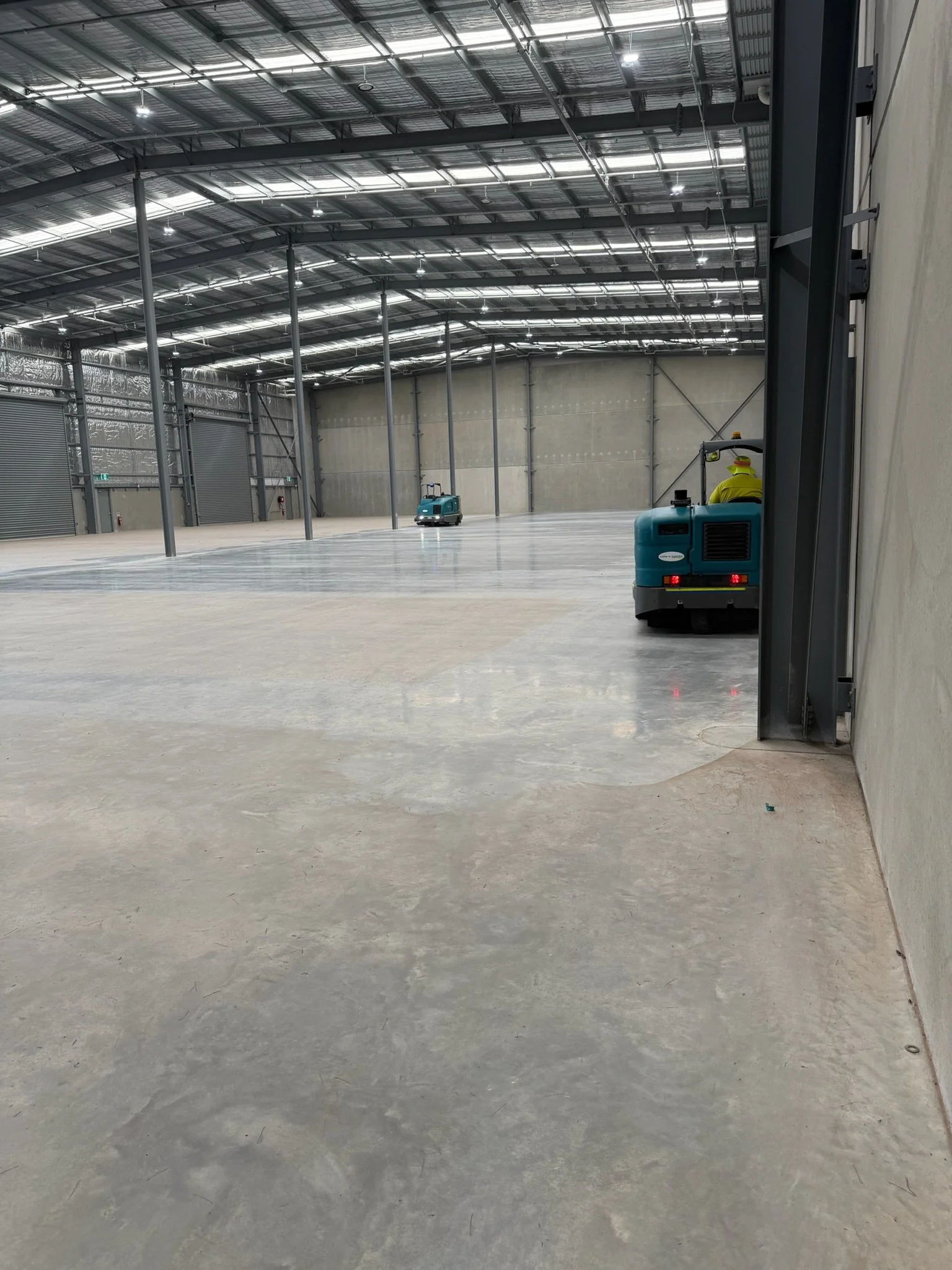
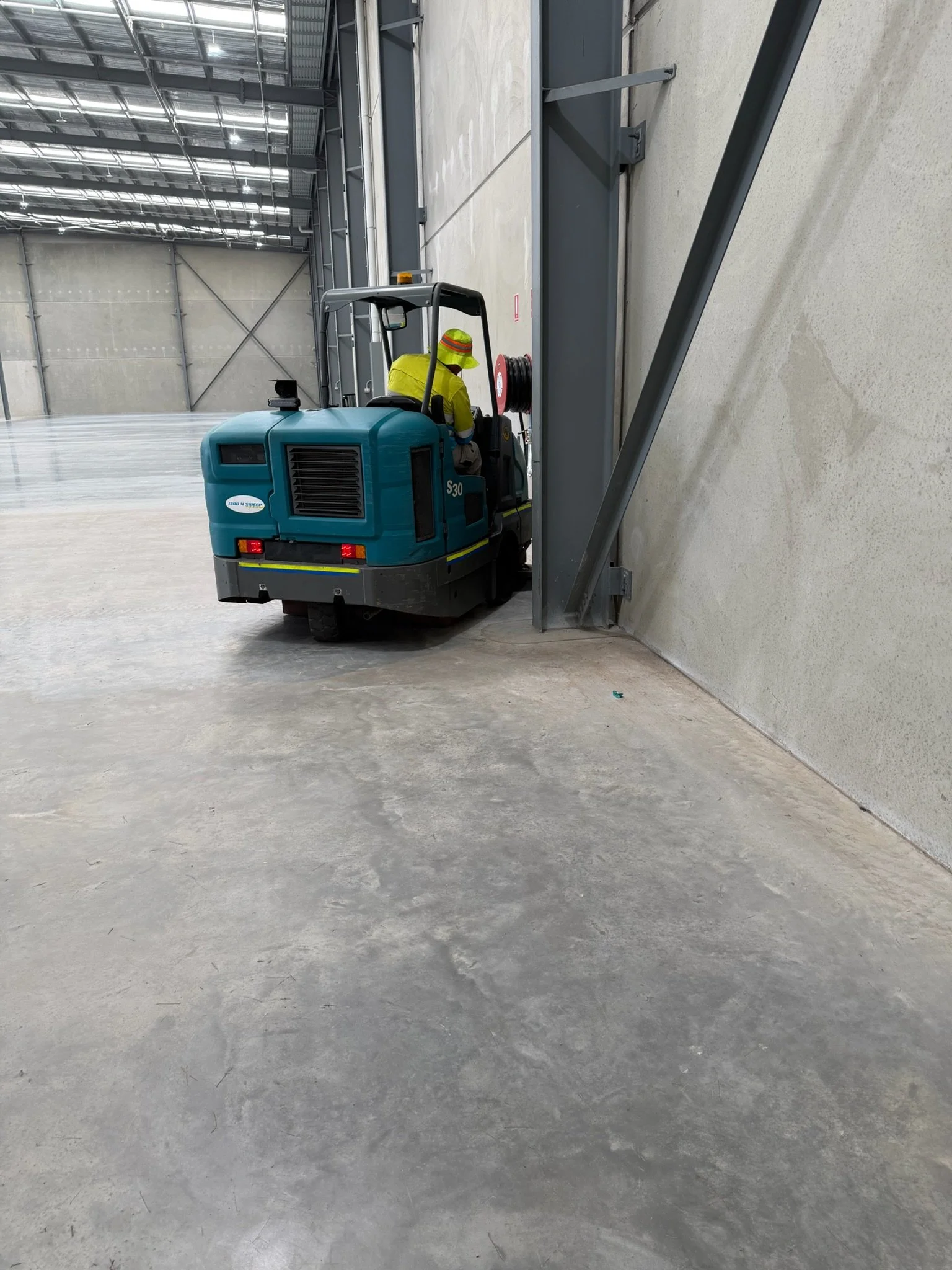
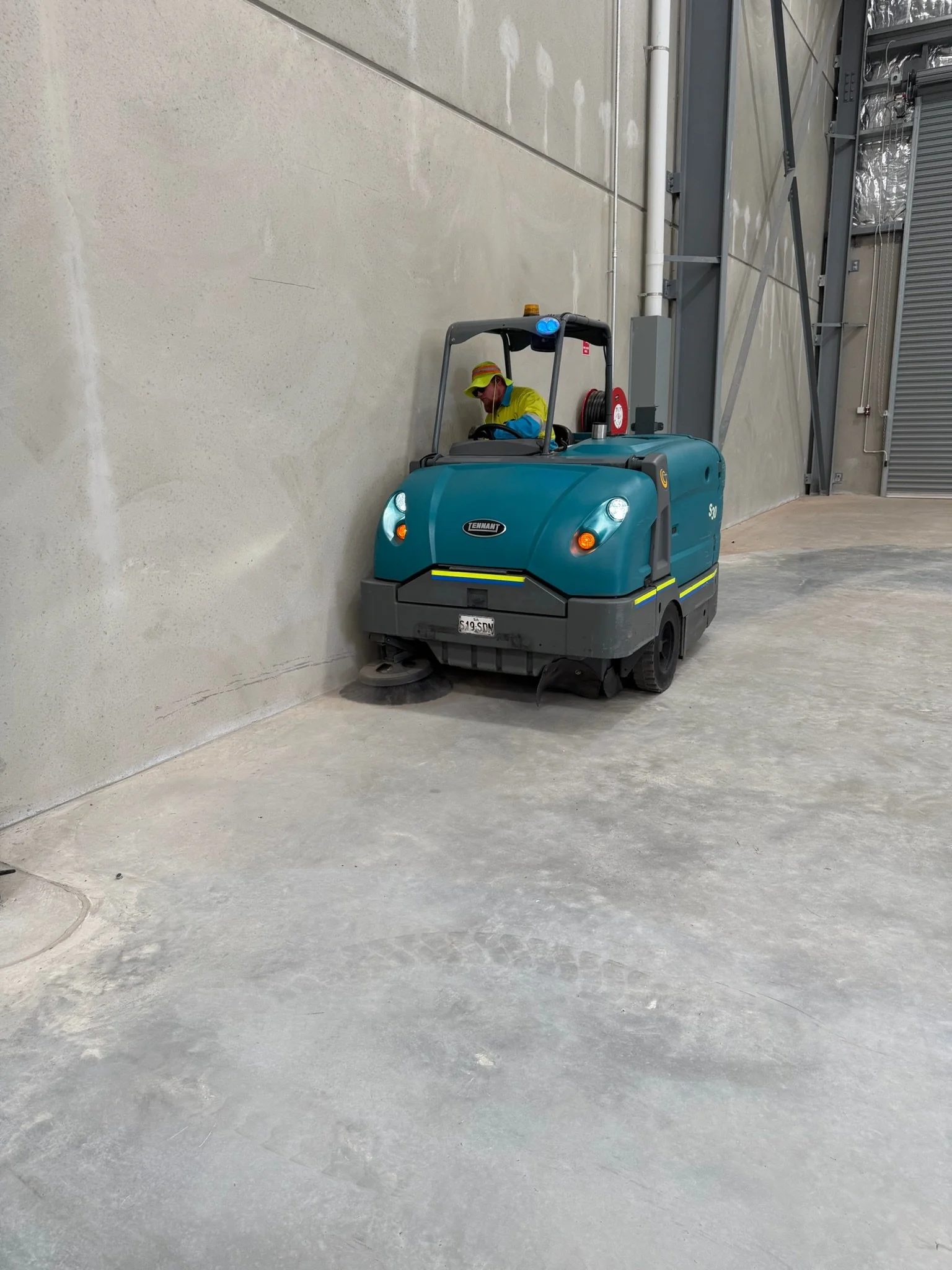
Mechanical sweeping first. Capture loose debris and fine dust before it is aerosolised. This protects floors from abrasion and stops scrubber pads from dragging grit.
Targeted scrubbing next. Apply a precision-dosed detergent, agitate with the correct pad or brush, and vacuum-recover in a single pass to remove oils, tyre polymers and bonded soils.
Selective hot water pressure cleaning with recovery. Only where baked-on contamination persists, or in trenches, drains and loading zones. Always pair with vacuum recovery to keep wastewater out of stormwater systems.
This approach reduces airborne dust, improves traction and uses less water than blanket pressure washing. For complex or multi-level sites, compact walk-behind units maintain quality where ride-on machines cannot reach.
If you need broader commercial support around audits or seasonal peaks, see how Adelaide commercial cleaning programs can integrate floors with vertical surface dusting and documentation requirements.
Adelaide cleaning cadence by traffic level
Every site is different, so treat the following as a starting point. Sweep Scrub confirms frequency, access constraints and wastewater handling during a free on-site assessment before issuing a fixed-price quote.
Low traffic (small parts, limited forklift cycles): Mechanical sweeping weekly; scrubbing every 4 to 6 weeks. Spot scrub sooner at docks or battery charge bays if tyre marks or residue appear.
Medium traffic (mixed SKUs, daily dock turns): Mechanical sweeping 2 to 3 times per week; scrubbing fortnightly. Add monthly selective hot water pressure cleaning for dock aprons and trench lines with vacuum recovery.
High traffic or Q2 peak (fast-moving 3PL, cross-dock, high pick density): Daily or every-shift mechanical sweeping in pick faces and main aisles; scrubbing weekly. Schedule extra scrubs during heavy promotions or container bursts, and include targeted pressure cleaning for persistent grease in service bays or outside load zones.
Food-adjacent or compliance-driven areas: Maintain the same cadence as above by traffic, with stricter detergent selection and documentation (Safe Work Method Statement (SWMS), Job Safety and Environmental Assessment (JSEA), Material Safety Data Sheets (MSDS)).
For Port Adelaide operators needing intensive turnaround, consider industrial scrubbing options tailored to commercial floor cleaning in Port Adelaide when docks and staging areas must remain live.
When sweeping is enough, and when to step up to scrubbing
Mechanical sweeping is sufficient for day-to-day control of loose dust, pallet chips and grit. It keeps air clearer and prevents embedded abrasion. However, it will not remove:
Tyre polymer arcs and black heel marks
Oil films and battery residue
Fine particulate bonded to porous concrete or epoxy textures
Step up to scrubbing when you see dark arcs in turning circles, sheen in travel lanes, or when slip ratings fall in wet weather. Scrubbing uses detergent chemistry and pad action to lift bonded soils while vacuum squeegees recover solution in one pass. Ride-on units such as the T20 Industrial Ride-On Floor Scrubber excel on large floorplates; walk-behind scrubbers handle tight racking, mezzanines and multi-level facilities.
Compact vs ride-on sweepers under racking
Machine choice under racking affects outcomes. Ride-on sweepers cover volume efficiently, but aisle width, end-of-aisle turns and column spacing often limit access. Compact and walk-behind sweepers:
Fit between tight rack legs and column bases
Reach under lower beams and pick faces
Reduce collision and product-contact risk
Capture fines the first time rather than pushing dust deeper
Most Adelaide warehouses benefit from a hybrid plan: ride-on machines for main corridors and staging pads, compact units for aisles and detail work around columns. This combination raises dust capture rates and reduces rework.
Got Dust? Call Us! Request a tailored machine mix and schedule that fits your racking and traffic profile. 13004sweep
KPIs that show progress and ROI
Operational leaders should track cleaning like any other productivity input. Practical KPIs include:
Airborne dust reduction: Use low-cost particulate readings (PM10 or PM2.5) at fixed points pre and post-clean, and trend weekly. Aim for a consistent downward slope after introducing routine sweeping.
Incident reduction: Log slip or near-miss events in high-turn zones before and after scrubbing is added. Reductions typically follow removal of oil films and tyre polymers.
Pick-rate improvements: Compare lines per hour in dust-prone aisles before and after regular sweeping. Less dust on racking and scanners reduces rescans and misreads.
Equipment availability: Track fewer scanner lens cleans, conveyor stops or AGV faults. Cleaner floors and air reduce nuisance maintenance.
Presentation and audit scores: Document audit findings tied to cleanliness. Cleaner floors often shorten corrective-action lists and reduce follow-up visits.
The measurable ROI of routine industrial sweeping comes from time saved on housekeeping, fewer incidents, better pick accuracy and reduced wear on floors and tyres. These benefits compound when scrubbing removes the bonded layer that sweeping cannot touch.
For sites planning handover or upgrades, deep cleaning services in Adelaide can prepare slabs for epoxy, painting or lease exit with the correct sequencing and wastewater management.
How often should floors be cleaned?
Frequency hinges on traffic, contamination type and compliance needs. As a rule of thumb:
Sweep: from every shift in peak, to weekly in low-traffic environments.
Scrub: weekly for high traffic, fortnightly for medium, every 4 to 6 weeks for low traffic.
Pressure clean with recovery: monthly or quarterly, only where entrenched grease or trench contamination persists.
Seasonal note for Adelaide: ahead of Q2 stock turns, increase sweeping frequency in pick faces and schedule at least one whole-of-facility scrub to reset the baseline before volumes spike.
FAQ
Why do warehouses get dusty, and how do you control it? Forklift tyre wear, concrete abrasion, and pallet debris generate fine particulate that becomes airborne with traffic. Control it by sequencing mechanical sweeping, then scrubbing, and using selective hot water pressure cleaning with vacuum recovery for stubborn areas. Maintain the right machine mix for open areas and tight racking.
How often should warehouse floors be cleaned? Match cadence to traffic. Sweep from weekly to every shift. Scrub from every 4 to 6 weeks up to weekly for high-turn sites, and apply targeted pressure cleaning monthly or quarterly where needed.
What is the measurable ROI of routine sweeping? Expect improved air quality, fewer slips and near misses, better pick accuracy and device reliability, and reduced floor and tyre wear. Track PM readings, incident logs, lines per hour, and unplanned maintenance to quantify the return.
When do you move from sweeping to scrubbing? When you see persistent tyre marks, sheen or slick patches, or recurring near misses in turning circles and docks. Scrubbing removes bonded contamination that sweeping cannot.
Why Adelaide facilities choose Sweep Scrub
Sweep Scrub designs on-site programs matched to your floor type, racking, traffic and compliance documentation. Teams work around live operations with zoned areas and trained spotters, manage wastewater recovery and disposal, and provide fixed-price quotes after a free on-site assessment. Services span INDUSTRIAL SWEEPING, INDUSTRIAL SCRUBBING and targeted hot water pressure cleaning with recovery, plus vertical surface dusting where needed.
If you also manage multi-site portfolios or need flexible commercial support, learn how commercial cleaning in Adelaide can be integrated with your maintenance plan without disrupting stock turns.
Summary and next step
A schedule that works is built on source control, the right sequence and a cadence that flexes with traffic. Sweep first to capture fines, scrub to remove bonded soils and slip risks, and keep pressure cleaning targeted with recovery. Track dust, incidents and pick rates to prove ROI, and choose compact and ride-on machines that actually reach the soil you want to remove.
Ready to reset your baseline before Q2 volumes land? Got Dust? Call Us! Book an on-site assessment for a tailored schedule and fixed-price quote. 13004sweep
Internal links included for your convenience:
Adelaide commercial cleaning programs: https://sweepscrub.com.au/commercial-cleaning
Deep cleaning services in Adelaide: https://sweepscrub.com.au/deep-cleaning
Commercial floor cleaning in Port Adelaide: https://sweepscrub.com.au/industrial-scrubbing
Industrial sweeping