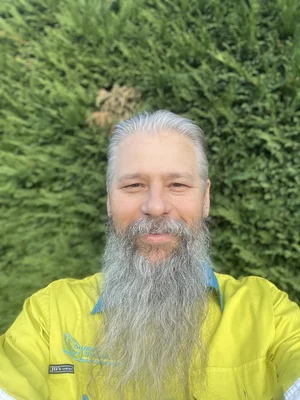
A clean pickleball court helps create a welcoming place to play. Dust, tracked-in dirt, leaf debris and spills can affect the appearance of the surface and leave contamination underfoot. For clubs, recreation centres, schools and private facilities, regular pickleball court cleaning is an important part of looking after the playing area.
Where the surface manufacturer permits machine cleaning, a pedestrian scrubber can provide controlled scrubbing and dirty-water recovery. The key is matching the equipment, brush and cleaning solution to the court coating—not treating a sports surface like a warehouse concrete floor.
What is a pedestrian scrubber?
A pedestrian scrubber, also called a walk-behind floor scrubber or scrubber dryer, is a cleaning machine guided by an operator on foot. It applies water or a suitable cleaning solution, agitates dirt with a brush, and collects dirty water through a squeegee and vacuum system.
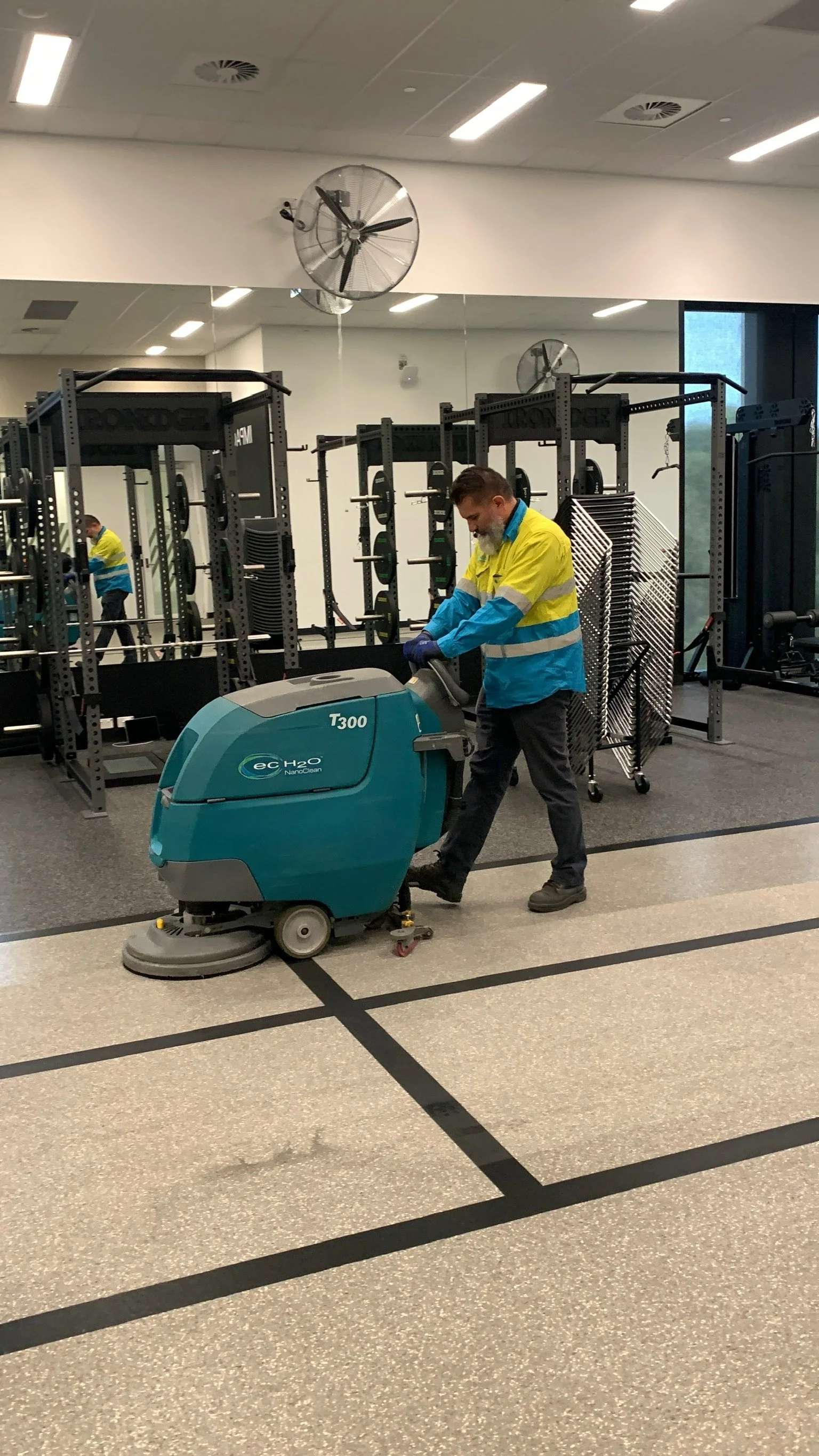
pedestrian walk-behind scrubber
For compatible pickleball court surfaces, this combination can help remove accumulated grime while limiting the amount of dirty water left behind. The court must still be checked and allowed to dry before players return.
Why pickleball courts need regular cleaning
Indoor courts collect dust, footwear dirt and spills. Outdoor courts also face leaves, windblown debris and contamination from surrounding trees. Areas near entrances, seating and court boundaries may need extra attention.
Cleaning removes loose material and surface contamination that can interfere with consistent footing. It also makes court markings easier to inspect and helps facility managers identify cracks, worn coatings and drainage problems.
However, cleaning cannot repair a damaged coating or restore worn surface texture. A court with peeling paint, persistent slippery areas or structural defects may need advice from its installer or a sports-surface specialist.
Can a pedestrian scrubber clean every pickleball court?
No. Pickleball courts may have acrylic coatings, cushioned systems, modular tiles or other sports flooring. Each has its own maintenance requirements.
Some court systems allow light-duty scrubbing with a soft brush after a specified curing period. Others require different methods. Before machine cleaning, confirm the exact surface system, its age, the manufacturer's maintenance instructions and any warranty conditions.
A newly coated court may be playable before it is ready for mechanical scrubbing. Always check the cleaning-specific curing requirement with the manufacturer or installer.
How to clean a pickleball court using a pedestrian scrubber
1. Inspect the surface and prepare the area
Close the court to players and inspect the playing surface, lines, edges and access routes. Note cracks, lifting coatings, damaged areas and places where water collects. Check that the machine's weight and wheels are suitable for the surface.
Plan the work around court bookings and allow time for cleaning, drying and a final inspection.
2. Remove loose dirt and debris
Sweep or vacuum using equipment suitable for the court. Remove grit, stones, leaves and rubbish before wet cleaning so the brush does not drag debris across the coating.
Pay particular attention to corners, fence lines and entrances, where material can accumulate.
3. Choose an approved brush and cleaner
Use the brush type and cleaning product approved for the specific surface. Where permitted, a soft brush and an approved low-foaming cleaner can suit scrubber-dryer cleaning. Follow the recommended dilution rather than adding extra detergent.
Avoid abrasive pads, aggressive brushes, solvents or strong chemicals unless the surface manufacturer expressly allows them. More aggressive cleaning can damage coatings or leave unwanted residue.
4. Test a small area first
Test the proposed method in an inconspicuous area before cleaning the whole court. Check for colour transfer, coating wear, line damage and residue after drying. Adjust the method or seek advice if the surface reacts poorly.
5. Scrub in controlled passes and recover dirty water
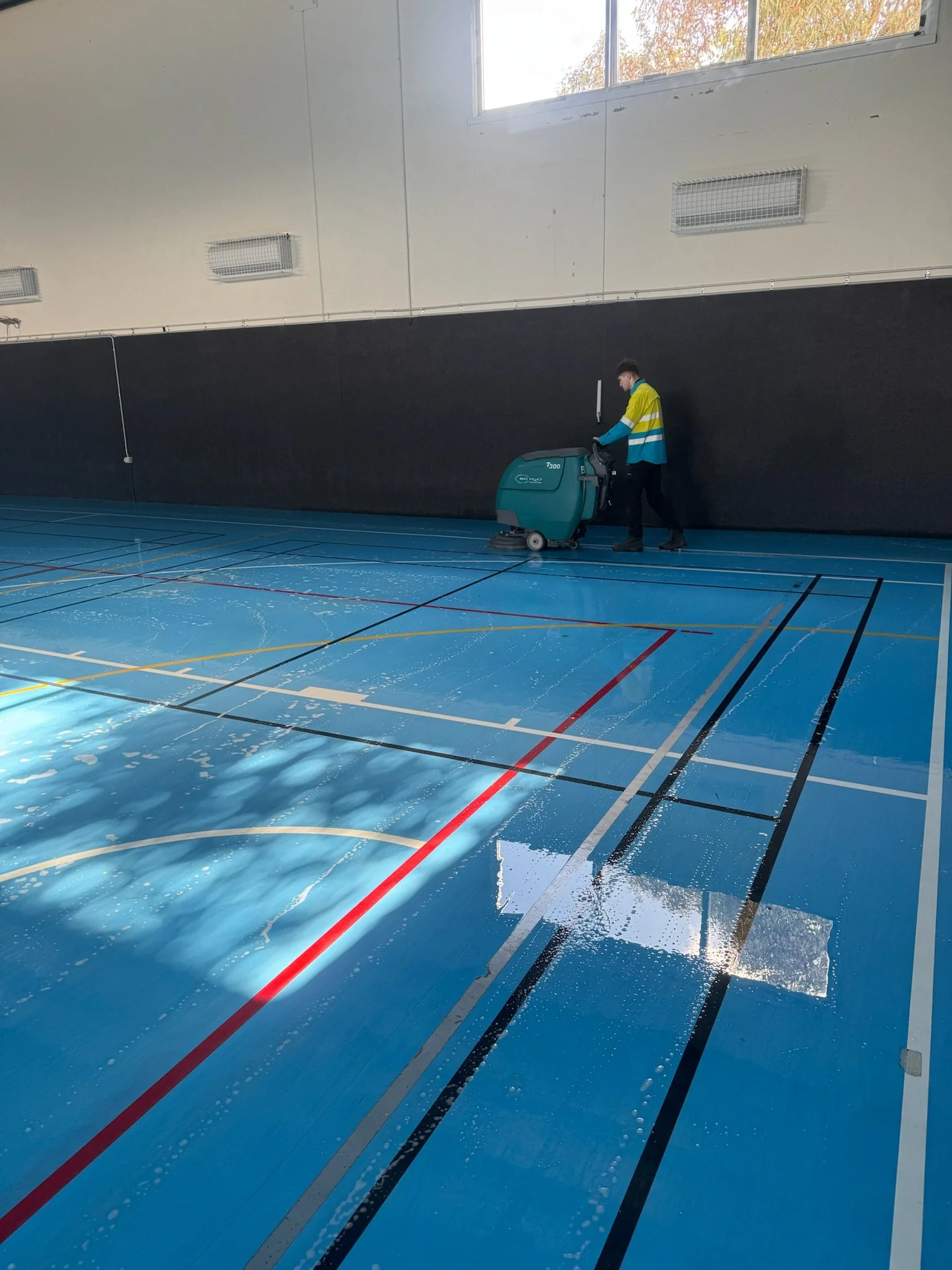
A controlled soaking of a court using a pedestrian scrubber.
Use an approved light-duty setting and steady, overlapping passes. Keep the machine moving and avoid repeated scrubbing of one spot. Monitor the brush, squeegee and water recovery throughout the job.
Clean edges and areas around posts separately with surface-compatible tools. If mould, algae or stubborn staining remains, seek an approved treatment instead of increasing abrasion.
6. Remove residue and inspect before reopening
Where required by the surface guidance, complete a clean-water rinse and recovery pass. Recover remaining puddles and handle collected wastewater through an appropriate disposal route.
Allow the court to dry, then check for remaining dirt, detergent residue, surface damage and slippery areas. Reopen only when it is suitable for play.
Benefits of a walk-behind scrubber for suitable courts
A pedestrian scrubber gives the operator close control around the court perimeter, access points and net posts. Its combination of scrubbing and water recovery can make routine maintenance practical at facilities with compatible surfaces.
Dirty-water collection also helps reduce pooling during cleaning. However, rough textures, damaged surfaces or uneven areas can reduce recovery performance, so manual finishing may still be needed.
The best results come from the right equipment and technique, supported by regular removal of loose debris between deeper cleans.
How often should a pickleball court be cleaned?
Base the schedule on usage, location, contamination and the surface manufacturer's instructions. Busy indoor facilities may need frequent dust removal, while outdoor courts may need additional attention after windy weather or leaf fall.
Check for loose debris before play, deal with spills promptly and schedule wet cleaning when the surface condition calls for it. If grime returns quickly, review entrance cleaning, surrounding vegetation and drainage as well as the court-cleaning schedule.
Pickleball court cleaning in Adelaide
Adelaide facility managers need a cleaning plan that suits their court surface and booking schedule. Whether you manage a dedicated pickleball venue, a shared sports court or a community recreation centre, the cleaning method should protect the coating while removing accumulated dirt.
Contact Sweep Scrub to discuss pickleball court cleaning in Adelaide and whether a pedestrian scrubber is suitable for your facility. Provide the surface brand, approximate age, court numbers and photographs to help assess the work.
Frequently asked questions
Is a pedestrian scrubber safe for acrylic pickleball courts?
It can be suitable for some acrylic court systems when the manufacturer permits it. Use the approved brush, cleaner and machine settings, observe the required curing period and test a small area first.
Can a floor scrubber remove mould or algae?
Scrubbing may remove some surface contamination, but mould or algae can require a manufacturer-approved treatment. Do not assume stronger detergent or heavier brush pressure is suitable.
Is pressure washing better than a pedestrian scrubber?
The appropriate method depends on the surface system and its condition. A pedestrian scrubber combines controlled agitation with dirty-water recovery; pressure washing has separate requirements for pressure, technique and coating age. Follow the court manufacturer's guidance.
Sweep Scrub provide both scrubbing and pressure washing. Allow us to decide which application is required.
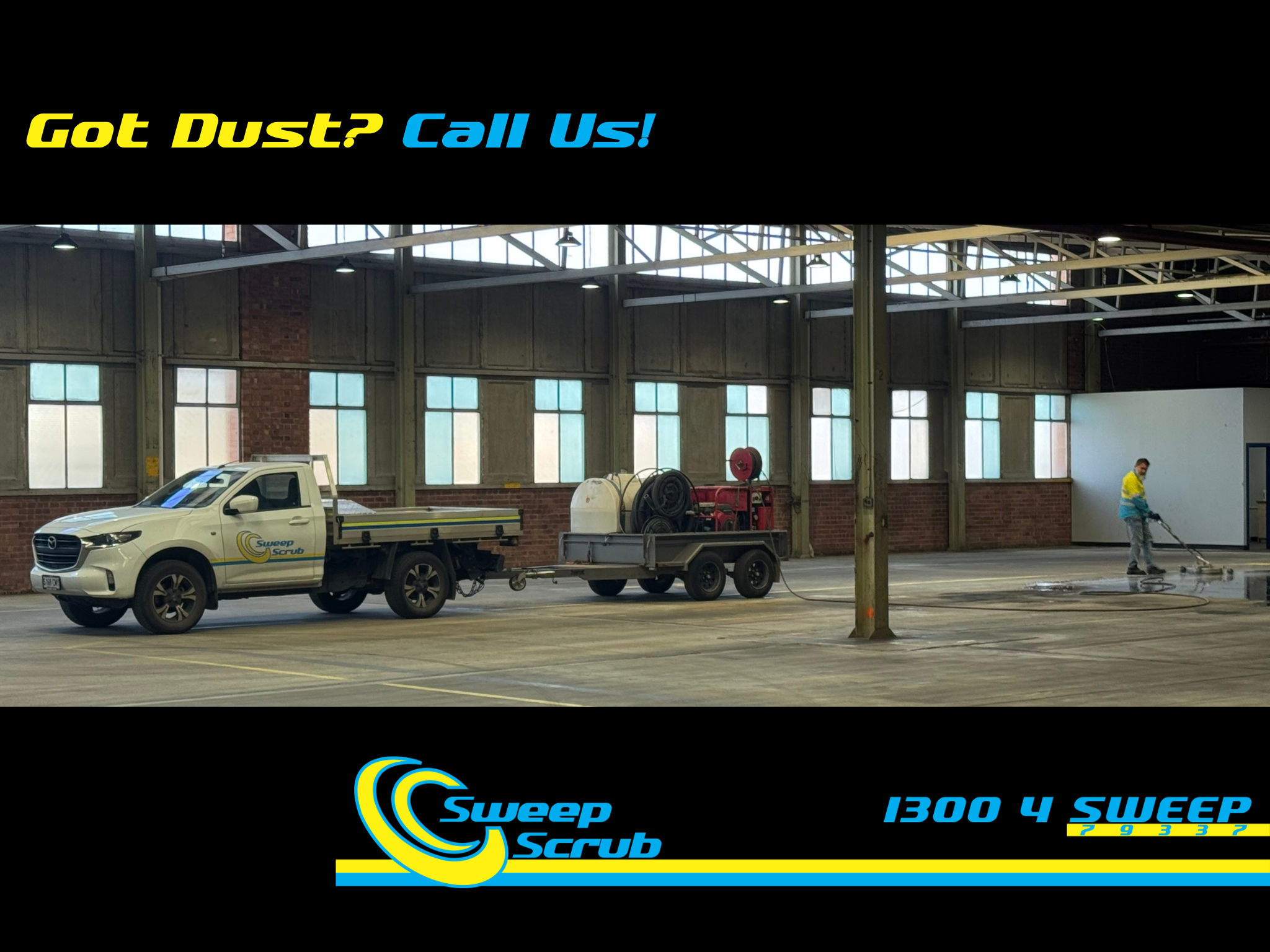
pressure washing unit ready for despatch
How long does pickleball court cleaning take?
The time depends on the number of courts, surface condition, access, cleaning method and drying conditions. Allow for preparation, any required rinsing and a final inspection as well as machine-cleaning time. Usually a couple of hours are required to clean and have you back on court.
How much does pickleball court cleaning cost in Adelaide?
Pricing depends on court size and numbers, contamination, surface type, access and the treatment required. A site assessment or clear photographs help establish the scope and quote.